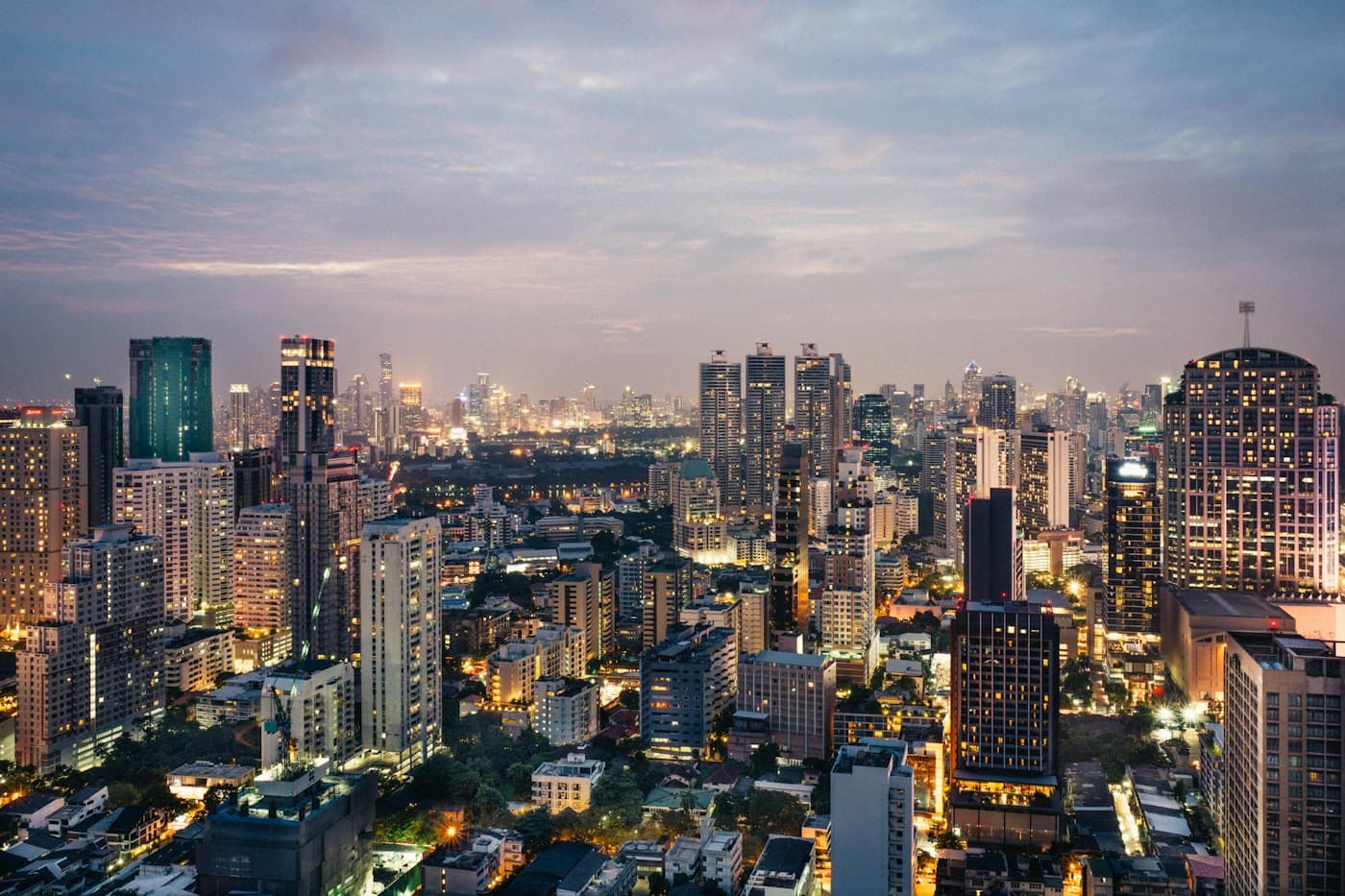
Where to stay in Bangkok
Bangkok rewards travellers who like contrast. Gilded temples sit beside glass towers, and a ten-minute walk can take you from a quiet canal to a night market that runs past midnight. Here is how the main areas compare, so you can choose a base that fits your trip before you pick a hotel.
| Area | Best for | Price | Walkability | Vibe |
|---|---|---|---|---|
| Sukhumvit | First-timers and shoppers | $$$· | ●●●●○ | Busy, modern and packed with malls, bars and restaurants. |
| Riverside | Luxury and sunset views | $$$$ | ●●○○○ | Graceful and scenic, with grand hotels facing the Chao Phraya. |
| Silom & Sathorn | Business trips and food lovers | $$$· | ●●●○○ | Office towers by day, lively dining and nightlife after dark. |
| Old City | Temples and budget travel | $··· | ●●●○○ | Historic, atmospheric and a little rough around the edges. |
| Siam | Shopping and easy transit | $$$· | ●●●●○ | Youthful and glossy, built around giant malls and busy walkways. |
Sukhumvit
First-timers and shoppersSukhumvit suits travellers who want convenience above all. The Skytrain makes it easy to reach the river, the malls and the main sights without a taxi, and you will never struggle to find a late meal. By day it is a bustling mix of offices, shopping centres and cafes. At night the side streets fill with bars, live music and street food, with some areas livelier than others. Pick a hotel close to a station and away from the busiest nightlife lanes if you want quiet sleep. Pavements can be crowded and uneven, and rush hour traffic is slow, so rely on the rail line.
Getting around: The BTS Skytrain runs along the main road, with MRT interchanges nearby.
Pros
- + Excellent Skytrain access
- + Huge choice of restaurants and bars
- + Wide range of hotel budgets
Cons
- - Heavy traffic at street level
- - Noisy near nightlife strips
- - Far from the old temples
Riverside
Luxury and sunset viewsThe riverside is for travellers who want Bangkok at a gentler pace. Large hotels line the banks, many with pools, spas and terraces for watching the boats go by at sunset. Days can be spent hopping on a ferry to temples and markets, then returning to a calm retreat. Evenings are quieter than elsewhere, mostly hotel restaurants and a few riverside venues. Getting around depends on boats and shuttles, so check how your hotel connects to the nearest rail station and when the shuttle stops running. It is a superb choice for honeymoons and special occasions, less so for nightlife seekers on a budget.
Getting around: Hotel shuttle boats and river ferries link to the Skytrain at a central pier.
Pros
- + Classic luxury hotels with river views
- + Relaxing escape from the traffic
- + Easy boat trips to major sights
Cons
- - Limited local street life nearby
- - Relies on boats or taxis
- - Often the priciest part of town
Silom & Sathorn
Business trips and food loversSilom and Sathorn work well for visitors who want a central base with an easy commute to almost everywhere. Weekdays feel purposeful, with office workers filling lunch spots and cafes. After dark the area changes, with night markets, rooftop bars and a well-known nightlife district drawing a mixed crowd. There are plenty of business hotels and a good range of mid-range and upscale options. Park and temple visits are simple to fit in, and the rail links make sightseeing painless. Be aware that some streets are loud late at night, and the traffic can make short taxi rides take a long time.
Getting around: Both BTS and MRT lines serve the area, with river piers close by.
Pros
- + Good BTS and MRT connections
- + Great mix of street food and fine dining
- + Close to the river and parks
Cons
- - Quiet and empty at weekends in places
- - Rush hour traffic is intense
- - Some streets feel very commercial
Old City
Temples and budget travelThe Old City is ideal for travellers who prioritise history and low prices. Many of Bangkok's best-known temples and the palace are within walking distance, and the backpacker streets nearby offer guesthouses and cheap eats. Days are best started early, before the heat and crowds build. Evenings are lively around the popular backstreets, though quieter in the heritage lanes. Without a rail line, you will use river boats, taxis and tuk-tuks, so agree fares or insist on the meter. Beware of friendly strangers who offer detours or closed-attraction stories, and expect basic facilities at the cheaper end.
Getting around: No Skytrain or metro in the core, so rely on river boats, taxis and tuk-tuks.
Pros
- + Walk to the Grand Palace and temples
- + Cheapest rooms in central Bangkok
- + Authentic local food and markets
Cons
- - Poor rail access
- - Fewer upscale hotel choices
- - Tourist touts around the major sights
Siam
Shopping and easy transitSiam is the heart of Bangkok's shopping scene and the easiest place to change trains. If your plan involves malls, cinemas, food courts and quick links to other districts, it is hard to beat. Air-conditioned walkways let you move around comfortably in hot or rainy weather. By day it hums with students and shoppers, and by night the malls stay open late while street vendors fill the pavements outside. It is less atmospheric than the older districts, and crowds can be heavy at peak times. Choose a hotel a short walk from the station, ideally on a side street, for a calmer night.
Getting around: The central BTS interchange here joins both Skytrain lines, with covered walkways.
Pros
- + Best Skytrain connectivity in the city
- + Covered walkways between malls
- + Plenty of mid-range and upscale hotels
Cons
- - Crowded at weekends and evenings
- - Feels commercial rather than local
- - Street noise from constant traffic
Found your area?
See hotels and indicative prices in Bangkok.