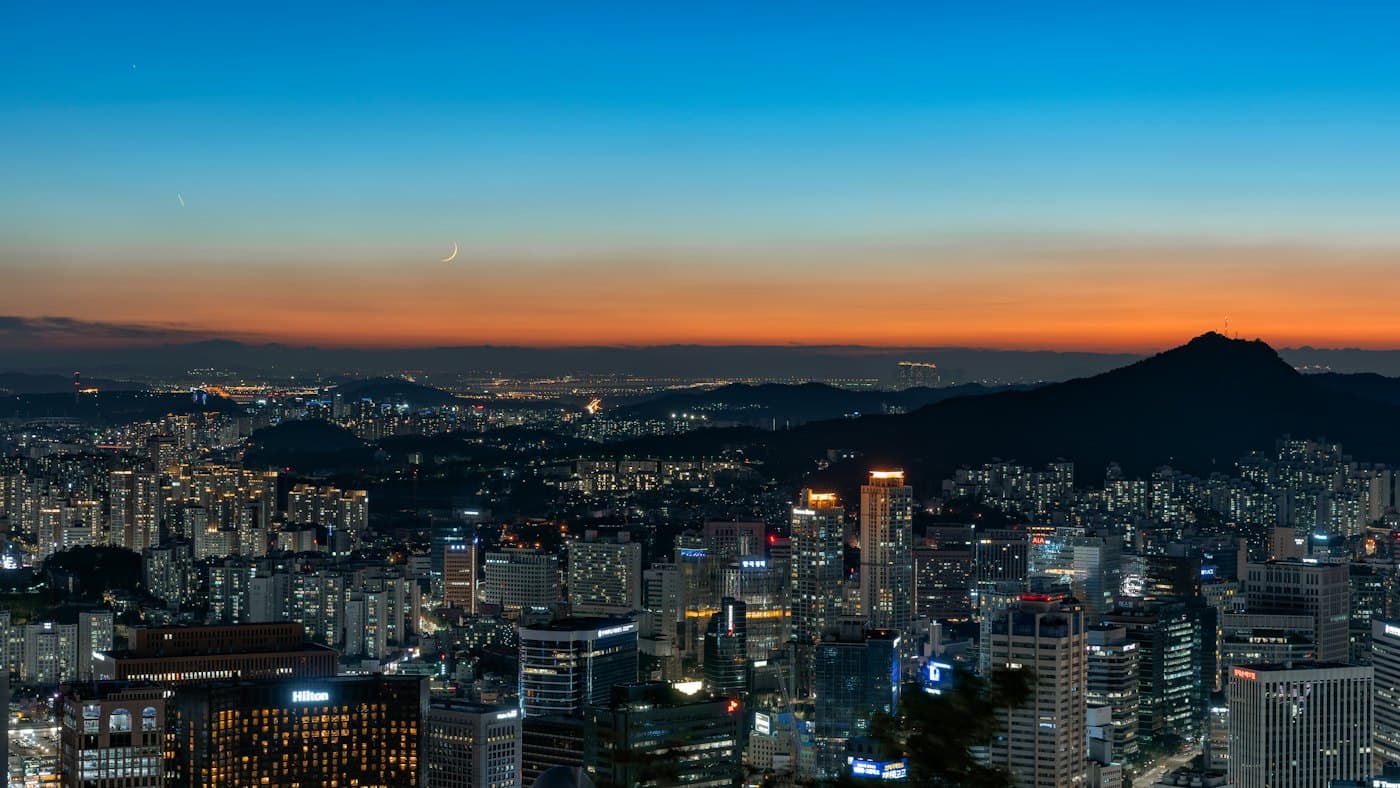
Where to stay in Seoul
Seoul feels future-facing and deeply traditional at the same time. Royal palaces sit a few subway stops from fashion districts, and hanok guesthouses offer a night on a heated floor. Here is how the main areas compare, so you can choose a base that fits your trip before you pick a hotel.
| Area | Best for | Price | Walkability | Vibe |
|---|---|---|---|---|
| Myeongdong | First-timers and beauty shoppers | $$$· | ●●●●○ | Bright, crowded and made for shopping and street snacks. |
| Hongdae | Nightlife and younger travellers | $$·· | ●●●●○ | Creative, youthful and loud after dark. |
| Gangnam | Business trips and upscale dining | $$$$ | ●●●○○ | Sleek, modern and polished, with towers and designer shops. |
| Bukchon & Insadong | Culture and traditional stays | $$$· | ●●●●○ | Quiet, historic and charming, with tea rooms and craft shops. |
| Itaewon | Global food and nightlife | $$$· | ●●●○○ | Multicultural, relaxed and lively after dark. |
Myeongdong
First-timers and beauty shoppersMyeongdong is a convenient, lively base for a first visit. Cosmetics stores, fashion shops and food stalls fill the streets, and the main palaces, markets and a famous tower are within a short subway or bus ride. By day it is bustling, and by night it becomes a glowing, crowded walkway where street vendors are at their busiest. Hotels here range from simple to luxurious, and many staff speak English. The trade-off is crowds and noise, so ask for a room on a higher floor or away from the main lanes. Prices for food and rooms are not the lowest, but convenience is hard to beat.
Getting around: Served by subway, with direct links to the airport railway via a major station nearby.
Pros
- + Beauty shops and street food
- + Central subway access
- + Easy airport connection
Cons
- - Very crowded in the evenings
- - Touristy prices
- - Noisy with street sellers
Hongdae
Nightlife and younger travellersHongdae is built around a university and has the energy to match. Street buskers, independent shops, cafes and clubs give the area a creative buzz, and the nightlife runs late. Days are slower, with brunch spots, vintage shopping and galleries. The area is lively and safe, and prices are friendlier than in the big shopping districts. Hotels and guesthouses are plentiful but can be small or dated, so read recent reviews. Light sleepers should choose rooms away from nightlife streets. With the airport railway nearby and the subway connecting you to palaces and markets, it is a fine base for friends and solo travellers.
Getting around: Subway and airport railway both stop nearby, making arrival simple.
Pros
- + Music, clubs and street performances
- + Plenty of cheap eats and cafes
- + Direct airport railway link
Cons
- - Late-night noise
- - Hotels can be basic
- - Crowded at weekends
Gangnam
Business trips and upscale diningGangnam is where Seoul shows off its modern side. Glass towers, high-end boutiques, conference halls and polished cafes define the district, and evenings include upscale dining and busy nightlife. It is a practical base for business travellers and for visitors interested in shopping, beauty clinics and entertainment. Subway lines connect easily to other parts of the city, though reaching the old palaces takes a longer ride. Prices are generally higher than in the older districts. If you want traditional streets and walkable heritage, you may feel disconnected from the main sights, but comfort and service are strong.
Getting around: Served by multiple subway lines, but the historic sights are a longer ride away.
Pros
- + Excellent restaurants and spas
- + Modern business hotels
- + Large shopping and entertainment areas
Cons
- - Far from the palaces
- - Expensive
- - Less historic atmosphere
Bukchon & Insadong
Culture and traditional staysThis area is ideal for travellers who want atmosphere and history. Palaces, museums, tea houses and craft shops sit within walking distance, and sleeping in a traditional guesthouse with a heated floor is a memorable experience. Days are for strolling quiet lanes and exploring cultural sites. Evenings are calm, with local restaurants and tea rooms rather than clubs. Hanok rooms are charming but have thin walls, shared facilities in some cases and limited storage, so check what is included. Some residential lanes ask visitors to keep noise down, and hills can be tiring with luggage.
Getting around: Subway stations are close, though some hanok lanes are a walk from the nearest stop.
Pros
- + Palaces and hanok lanes on foot
- + Traditional guesthouses to sleep in
- + Tea houses and craft shops
Cons
- - Hilly, narrow lanes
- - Hanok rooms have thin walls
- - Fewer nightlife options
Itaewon
Global food and nightlifeItaewon is the city's international district, known for restaurants from around the world, craft beer bars and a mixed crowd. Days can be spent in boutiques, museums and nearby hillside neighbourhoods with views over the city. After dark, the main road and side lanes fill with diners and bar-goers. Hotels range from stylish boutique stays to simple guesthouses. The streets can be steep, so wheeled luggage is awkward, and weekend evenings are packed. Check the position of your accommodation relative to the main road for a quieter night. It suits travellers who want variety and an easygoing, social atmosphere.
Getting around: Served by a subway line, with buses and taxis for the hilly side streets.
Pros
- + Wide range of international restaurants
- + Good bars and a diverse crowd
- + Close to the central subway network
Cons
- - Steep hills
- - Late-night noise
- - Crowds at weekends
Found your area?
See hotels and indicative prices in Seoul.